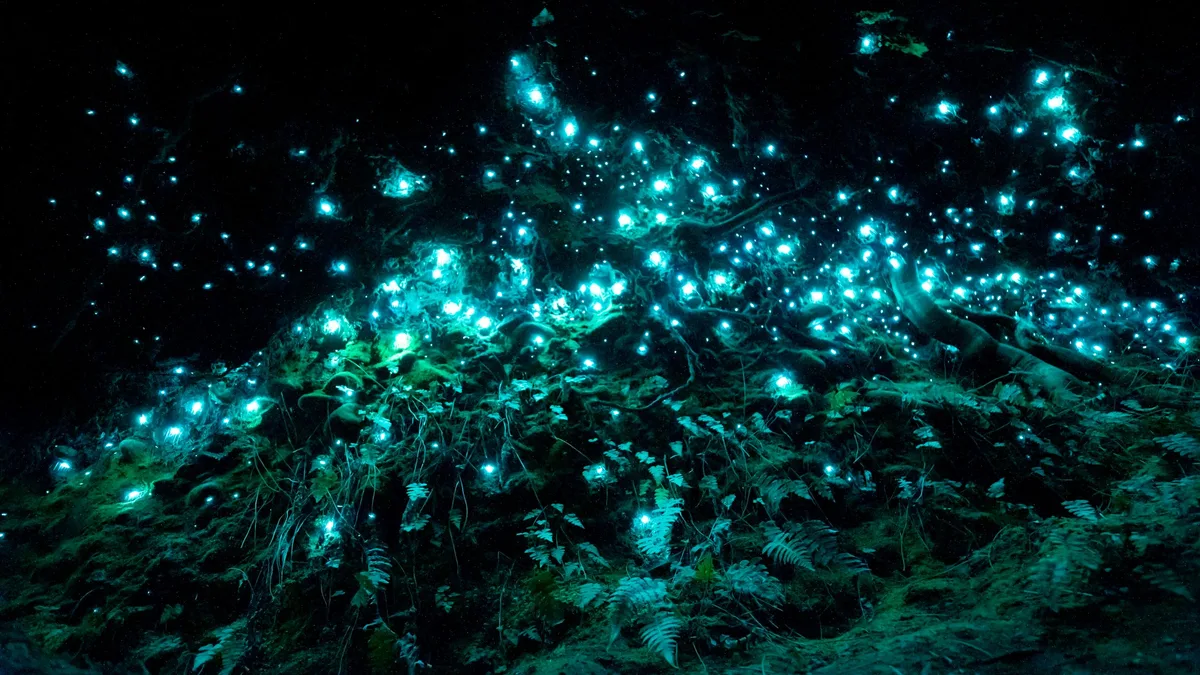
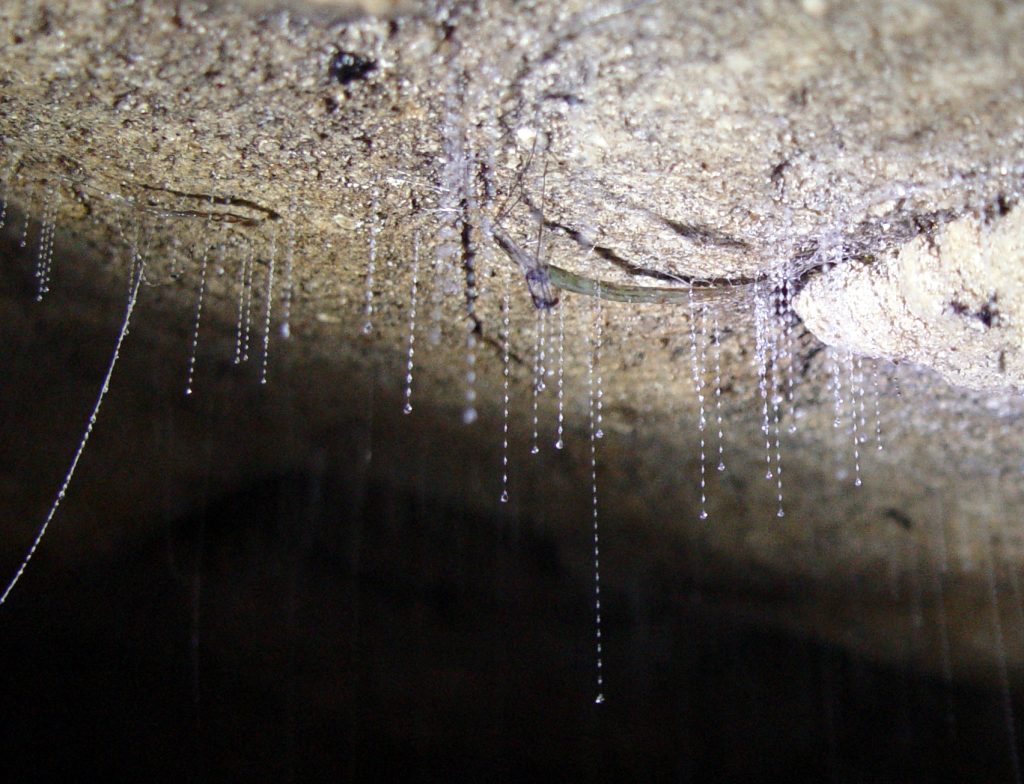
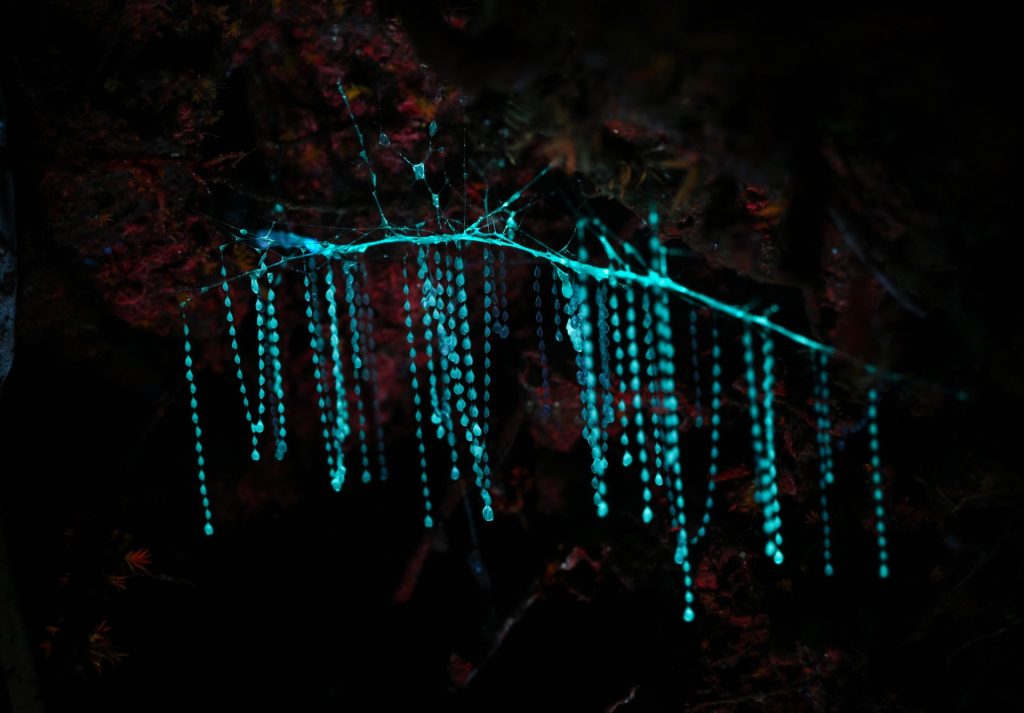
Arachnocampa luminosa, or the New Zealand glowworm, is a species endemic to the country and famous for it’s bioluminescent spectacle. Common glowworms, lampyris noctiluca, are actually a type of beetle, and the New Zealand variety are a species of fungus gnat. It is the larvae that are responsible for the twinkling blue and green lights that can be found all over New Zealand, most famously in the Waitomo glowworm caves. The light is created through a chemical reaction between an enzyme and oxygen, and the larva will immediately begin to glow upon hatching from the egg. It will then begin to create it’s silk nest on a cave ceiling. Once created, it will hang silk threads from the nest, which are covered in droplets of sticky mucus that glow in the dark. The larva will use the glow to lure in prey and trap them on these threads, for an easy meal.
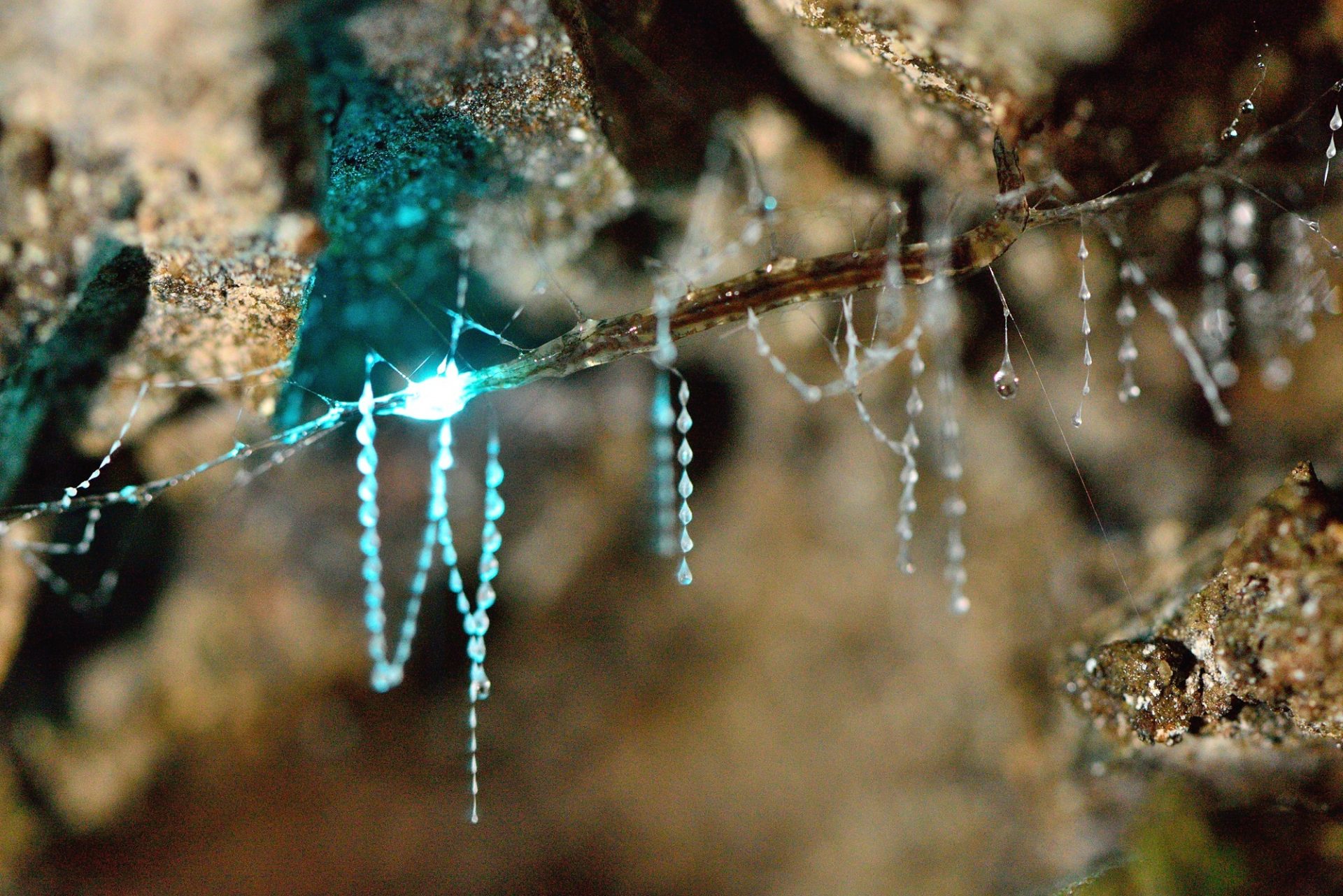
After a period of several months of eating and growing, the larva will suspend itself from a silk thread and pupate for up to a day. The pupal stage will last for about two weeks, and the pupa will continue to glow during this time. Once they hatch, females will live up to 76 hours and males up to 96 hours. The females will lay over 100 eggs that will hatch after about twenty days, thus completing the cycle.